Architecture should reveal something --- it should summarize, condense and showcase the intrinsic qualities of a place. It is capable of shaping human behaviors and creating atmospheres, providing a sense of tranquility and poetry, evoking compassion and kindness, and fostering a sense of shared community.
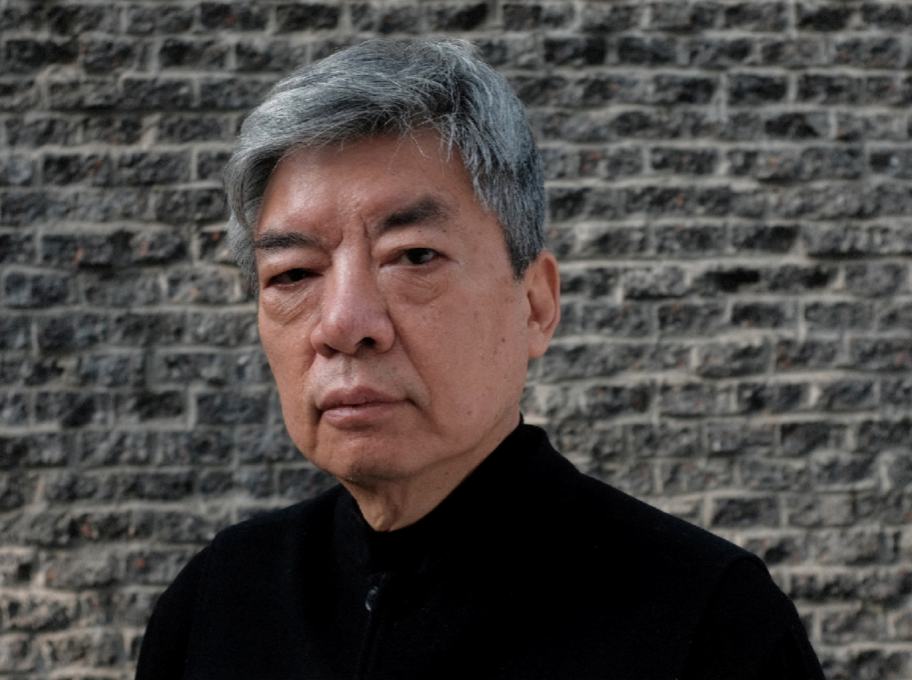
---Liu Jiakun
Liu Jiakun entered the Department of Architecture of Chongqing Institute of Civil Engineering and Architecture (Grade 1977, now the School of Architecture and Urban Planning of Chongqing University) in February 1978 and graduated in early 1982. He is currently the chief architect of Jiakun Architects. His works have won awards and honors such as 2017 WAN Awards, the 9th Far Eastern Architectural Design Award for Excellence in 2017, the Excellent City Regeneration Award of 2016 World Architecture Awards for Chinese Architecture, 2011 International Architecture Award from the Chicago Athenaeum: Museum of Architecture and Design, the 6th Far Eastern Architectural Design Award for Excellence in 2007, 2012 "Top 100 Architects in Modern China" by Architectural Society of China and 2020-2022 "The China Eminent Architect 100, RIBA". Liu Jiakun is also the second Chinese architect to win the Pritzker Prize, the highest honor in the global architectural circle, following Wang Shu in 2012. He holds significant influence in the contemporary Chinese architectural circle.
The Pritzker Architecture Prize announced that Liu Jiakun from Chengdu, China has won the 2025 Pritzker Architecture Prize. This award is recognized internationally as the highest honor in the architectural circle.
"Architecture should reveal something --- it should summarize, condense and showcase the intrinsic qualities of a place. It is capable of shaping human behaviors and creating atmospheres, providing a sense of tranquility and poetry, evoking compassion and kindness, and fostering a sense of shared community." Liu Jiakun said.
Liu Jiakun brings together elements that may seem contradictory, such as utopia and everyday life, history and modernity, collectivism and individual values, creating architecture that supports and celebrates the lifestyle of ordinary citizens. He upholds the transcendent power of the building environment, and coordinates cultural, historical, emotional, and social dimensions to unite communities through architecture to inspire humanistic care, and elevate the human spirit.
The adjudicators' remarks in 2025 states that Liu Jiakun's work demonstrates profound coherence and consistence, free from the constraints of any aesthetic or stylistic dogma, imagining and constructing a new world. What he advocates is a strategy rather than a style, which never relies on repetitive methods but evaluates each project in different ways based on its specific characteristics and needs. In other words, Liu Jiakun, based on the present, deals with his design in a way that suits local conditions, and even presents us with a brand-new scene of daily life. Apart from knowledge and technology, the most powerful tools he has added to the architect's toolbox are common sense and wisdom.
Liu Jiakun has created public areas in densely populated cities with scarce open space, establishing a positive connection between density and spatial openness. By integrating multiple architectural forms into a project, he has innovated in the role of citizens' activity spaces to meet the extensive needs of a diverse society. Xicundayuan (Chengdu, China, 2015) is a five-story building that spans an entire block, presenting a striking visual contrast with the surrounding typical mid-to-high-rise buildings in visual perception and the surrounding environment. He designed a slope path that is both open and enclosed for cyclists and pedestrians, encircling this vibrant urban space where various cultural, sports, entertainment, official and commercial events can be held, and the public can enjoy the surrounding natural and architectural environment through the facade. The Teaching Building of Department of Sculpture, Sichuan Fine Arts Institute (Chongqing, China, 2004) demonstrates an alternative solution for maximizing space, which makes the upper floors of the building extend outward with cantilevers, achieving a larger floor area on a narrow footprint.